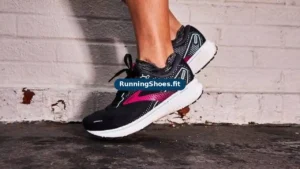


Plenty of runners know the pattern. The legs feel fine, the lungs feel fine, and then somewhere around the last third of a long run the lower back starts to tighten, ache, and complain all the way home.
I am Muhammad, editor of RunningShoes.fit, and this guide looks at the best running shoes for back pain with honest expectations. Shoes cannot fix posture, weak glutes, or a desk bound lifestyle, but the right pair can cut the impact your spine has to absorb on every stride, and that is a real, worthwhile difference.
Why your back feels your running shoes
Every footstrike sends a shock wave up the body. A healthy stride spreads that force across the foot, ankle, knee, and hip, but whatever the legs fail to absorb keeps travelling, and the lower back is where the bill often arrives.
Impact adds up over thousands of steps
A single step is nothing. Ten thousand steps on a long run is a different story, especially in worn out shoes whose foam has packed down and stopped doing its job, which is why back soreness that creeps in late in a run so often traces back to tired cushioning rather than a tired back.
Stability matters as much as softness
Here is the part most shoe advice gets wrong. A very soft shoe on a wobbly platform can make a sensitive back worse, because your hips and trunk muscles work overtime to keep you balanced, so the goal is cushioning with a stable base underneath it, not maximum squish at any cost.
Stability is the part to test in person, not just read about. If your arches collapse when you stand, or you wear through the inside edge of your outsoles, a guided shoe can steady the whole chain from foot to lower back. Options range from gentle guidance systems to firmer support, and our guide to the best stability running shoes for overpronation explains who each level suits. Neutral runners gain nothing from extra guidance, so do not buy support you do not need.
It is also worth saying plainly: shoes are one lever among several. The Mayo Clinic guide to back pain puts regular exercise, core strength, and flexibility at the centre of prevention, and no shoe replaces that work.
The best running shoes for back pain
Best overall: Hoka Bondi 9
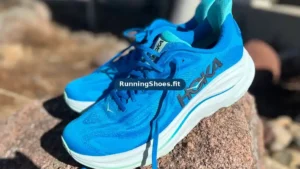
The Bondi 9 is the shoe most back pain runners should try first. It pairs the deepest cushioning in the Hoka range with a wide, stable platform, a smooth MetaRocker, and the Active Foot Frame, which cradles the heel instead of letting it slosh around on top of the foam.
The numbers support the brief: roughly 43mm of supercritical EVA foam under the heel on a moderate 5mm drop, at about $165. The ride is soft but controlled, and the broad base means your hips are not fighting for balance late in a run, which is exactly when backs start to grumble. Full specs are on the official Hoka Bondi 9 page.
Choose the Bondi if your back pain shows up on long, slow miles and recovery days. Lighter, faster runners who find max cushion shoes clumsy may prefer the next pick instead.
Best plush ride: New Balance Fresh Foam X More v6
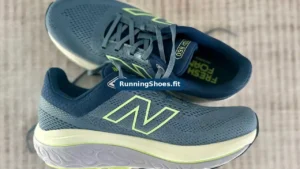
The More v6 is New Balance’s current maximum cushion trainer, replacing the More v5, and it is built around the tallest Fresh Foam X midsole the brand makes. Where the Bondi feels rockered and rolling, the More feels like a deep, calm landing pad, and runners whose backs dislike any hint of harshness tend to love it. It keeps the low 4mm drop and the tall 44mm heel and 40mm forefoot stack of the v5, with a fine tuned upper for comfort and breathability, and it still comes in multiple widths.
It runs on a low 4mm drop with a gentle rocker, at about $155 to $160, and New Balance sells it in multiple widths, which matters more than people think. A foot that is squeezed sideways cannot land naturally, and the compensation shows up further up the chain, so the wide options here are a genuine feature, not a footnote.
The trade off is purpose. The More v5 is an easy day shoe through and through, too soft and heavy for workouts, but for steady miles where impact reduction is the whole point, it earns its place in this guide.
Best traditional feel: Asics Gel-Nimbus 28
The Gel-Nimbus 28 is the current version, released in January 2026, and it replaces the Nimbus 27. It keeps FF Blast Plus foam and a PureGEL insert under the heel, on the same 8mm drop, but it is over 20g lighter than the 27, at about 281g in a men’s size. That lighter step matters for a sensitive back, because a heavy shoe adds work to every stride late in a run. It still suits runners who want serious cushioning in a more conventional package, with a steadier, more familiar feel than the two max stack shoes above.
At about $170, it is also the most versatile pick here. It handles daily training, long runs, and walking days without the towering sensation some runners never get used to, and the firmer heel bevel keeps transitions tidy when your form gets tired.
If your back pain travels with knee niggles, the Nimbus is worth comparing with the picks in our guide to the best running shoes for knee pain, because the same impact reduction logic applies to both joints.
| Shoe | Cushion style | Best for |
|---|---|---|
| Hoka Bondi 9 | Max cushion, rockered, stable base | Long runs and recovery miles |
| New Balance Fresh Foam X More v6 | Deepest Fresh Foam X, low drop | Softest landings, wide feet |
| Asics Gel-Nimbus 28 | Cushioned, traditional 8mm drop | Daily training with a familiar feel |
How to choose for a sensitive back
Start by checking the shoes you already own. If the foam feels dead, the heels lean to one side, or the pair is past 500 miles, replacement comes before diagnosis, and our explainer on how many miles running shoes last shows the wear signs to look for.
Then match the shoe to your stride.
Drop is the height difference between heel and forefoot, and it changes where the load lands. The Bondi sits at about 5mm, the More at 4mm, and the Nimbus at 8mm, so the Nimbus feels the most traditional underfoot while the More asks more of the calves and Achilles. If you move to a lower drop, transition over several weeks rather than switching in one run. Our heel drop explained guide walks through how each drop feels in practice.
Heavier heel strikers usually do best in the Bondi or Nimbus, runners who prefer a low drop and a plush landing lean toward the More, and anyone who feels unstable in tall shoes should stay with moderate stacks from our roundup of the best cushioned running shoes.Fit quietly matters here too. A heel that slips or a toe box that cramps changes how you land, so run through the checks in our guide on how running shoes should fit before blaming your spine for a sizing problem.
Give any new pair a fair test before judging it. Run three or four easy outings first, keep the routes familiar, and compare how your back feels at the same point in each run, because a shoe change and a training change in the same week tells you nothing about either one.
Keep a simple note of how your back feels after each run in the new pair, using the same route and the same easy pace for the first few weeks. If the ache arrives later each run, or fades altogether, the shoe is helping. If it arrives earlier, or moves to a new spot, the shoe may not suit your stride. On non running days, a cushioned walking shoe can keep the same protection going, and our guide to the best running shoes for walking covers the softest options.
What shoes cannot do
Let us keep the promise honest. If your back pain comes from weak glutes, tight hip flexors, a sudden mileage jump, or hours of sitting, a new shoe will soften the symptoms at best, and the fix lives in strength work, sensible training loads, and sometimes a proper medical assessment.
Runners with a neutral stride who simply want less impact day to day are also well served by the trainers in our guide to the best neutral running shoes. Think of the three picks above as the high protection end of that same spectrum, bought when your back has started voting on your shoe choices.
Watch: why runners get low back pain
This video explains why running aggravates low back pain and what drives it mechanically. It pairs well with this guide, because it covers the form and strength side that shoes alone cannot fix.
Frequently asked questions
Can running shoes really help back pain?
They can help when impact is part of the problem. Cushioned shoes on a stable platform reduce the shock travelling up the legs with every step, but they do not fix posture, weak muscles, or training errors, so treat them as one part of the answer.
Are softer shoes always better for a bad back?
No. Very soft shoes on unstable platforms make your hips and trunk work harder to balance, which can aggravate a sensitive back. Look for generous cushioning with a wide, steady base, like the Bondi 9 or More v5.
What heel drop suits back pain runners?
There is no single magic number. Moderate drops around 5mm to 8mm suit most runners, while the low 4mm drop of the More v5 shifts more load to the calves and Achilles, so transition gradually if you are used to higher drops.
How often should I replace shoes if I have back pain?
Sooner than most runners do. Once foam packs down, impact absorption drops sharply, so plan on roughly 300 to 500 miles and replace the pair when your back starts complaining on routes that used to feel fine.
When should back pain stop me running?
Stop and get assessed if pain shoots down a leg, causes numbness or weakness, follows a fall, or simply refuses to improve after a few weeks of easier training. Those are medical questions, not shoe questions.
The bottom line
For runners whose backs ache after long runs, the Bondi 9 is the safest first try, the More v6 is the softest landing, and the Gel-Nimbus 28 is the familiar all rounder. Whichever you pick, the principle is the same: cushion the impact, but keep the platform stable.
Pair the shoes with core work and sensible mileage, and judge the change over a few weeks of easy runs. If the ache fades as the miles pass, your shoes were part of the problem, and now they are part of the fix.
Medical disclaimer: this guide is general information only and is not medical advice. Back pain has many causes, some of them serious, and persistent, severe, or worsening pain should be assessed in person by a qualified health professional before you run through it.