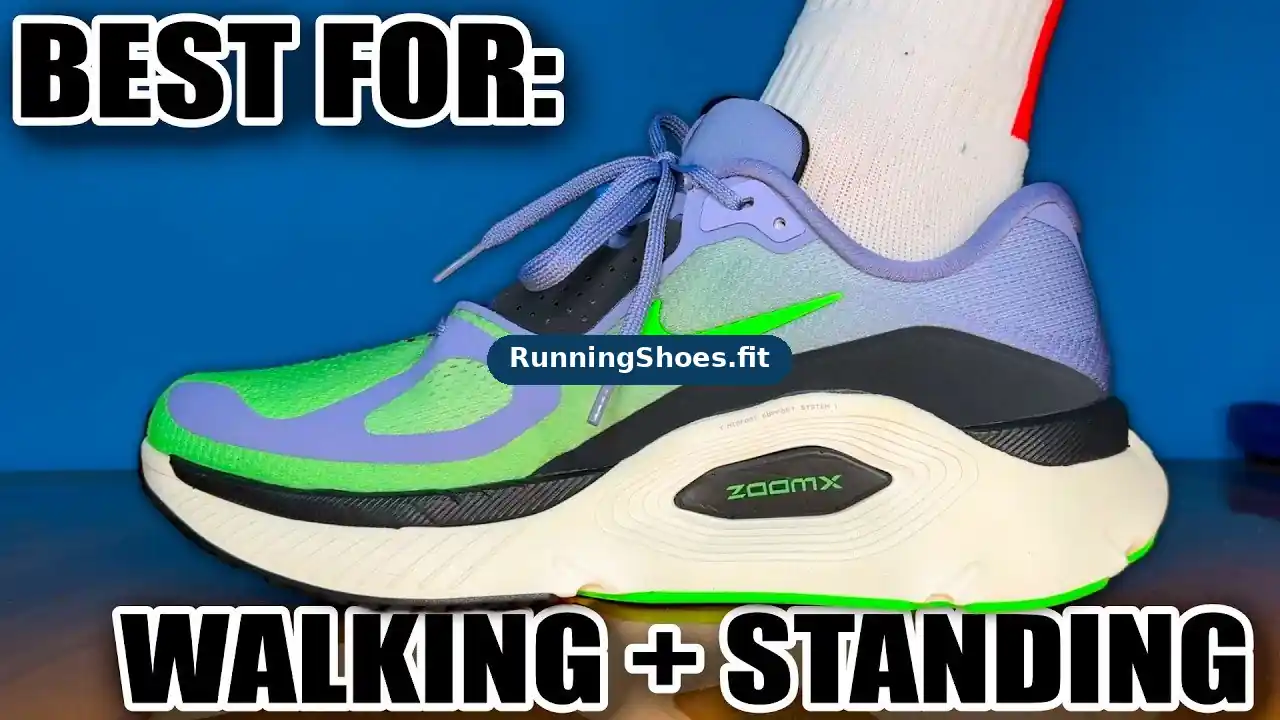

Walk into any running store and ask for a walking shoe, and the staff will probably point you toward the running wall. That is not a sales trick. When you compare the best running shoes for walking with traditional walking shoes, the running shoes are simply built better for long hours on your feet.
I am Muhammad, editor of RunningShoes.fit, and I walk in running shoes almost every day. The catch is that not every running shoe walks well: some are built for race day speed, others for muddy trails, and neither is ideal for a daily five mile walk. If you are starting from scratch, our guide on what to look for when buying running shoes is a good companion to this one.
Why running shoes make great walking shoes
Walking and running ask similar things from a shoe. You need cushioning to soften each landing, a stable base, and enough flexibility to roll through your stride. Modern running shoes deliver all three with better foam and smarter geometry than traditional walking shoes.
They are also lighter. A typical old school walking shoe can feel clunky after an hour, while a cushioned trainer stays comfortable because there is less weight dragging on your foot with every step.
The weight adds up faster than it feels. A shoe 100 grams heavier per foot means an extra 100 grams lifted every step: over 10,000 steps, roughly a tonne of extra weight per foot. That is why walkers who stand all day notice heavy shoes first, as tired legs by mid afternoon. Lighter is not always better: the lightest shoes often cut outsole rubber, which wears out faster on pavement. The sweet spot is a shoe that feels light but still has a full rubber outsole. Pick the shoe up in the shop and compare two or three: your hands will feel a difference your eyes cannot see.
Less weight means less fatigue, and that matters on long walks.What to look for
Cushioning that lasts all day
Cushioning is the first thing you notice and the first thing cheap shoes get wrong. Look for a thick, responsive midsole that still feels supportive after miles, not just in the store. Foam that bottoms out by lunchtime will leave your knees and back complaining.
You do not need the softest shoe on the wall.
Stability or neutral comes down to one thing: watch your ankles. If they roll inward when you walk, or your old shoes wear heavily on the inner edge, a stability shoe with a firmer inner midsole will guide your foot and ease strain. If your stride is neutral, a stability shoe will feel intrusive, so stick with a neutral cushioned shoe. High arches need the opposite: soft neutral cushioning, because a rigid arch absorbs little shock. When in doubt, a free foot scan at a running store settles it in minutes. Our guide to the best shoes for flat feet goes deeper on matching support to your foot. Cushioning alone never corrects a gait problem: if pain persists across several shoes, get a fitting, not a softer shoe.
Overly soft shoes can feel unstable, especially on uneven sidewalks. Aim for balance: plush enough to protect your joints, firm enough to keep you steady.Support for your arch type
Flat feet tend to roll inward, which can strain ankles and knees over long walks. If that sounds like you, a stability shoe with a bit of guidance can make a real difference. Our guide to the best shoes for flat feet goes deeper on matching support to your foot shape.
High arches need the opposite: neutral cushioning that absorbs shock and supports the arch. Runner’s World notes that a proper foot scan at a running store can reveal your arch type in minutes, and it is usually free.
Fit: the part most people get wrong
Most walkers wear shoes that are too small.
A five step fit check for walkers
Run this check before you pay. Shop in the afternoon, when your feet are largest, wearing the socks you walk in. Put both shoes on: leave a thumb’s width in front of your longest toe, with room for your toes to wiggle. Walk the store, then stand still: a pinch you feel standing still becomes a blister by mile three. If the length is right but your heel lifts, try lacing, not a smaller size: our guide on how to lace running shoes shows the heel lock method that stops heel slip without squeezing your toes. Never buy a tight shoe on the promise it will stretch: a shoe that hurts in the shop will hurt on the road.
Feet swell during the day, so shop in the afternoon and leave a thumb’s width of space in front of your longest toe. If you are unsure, read our complete guide on how running shoes should fit before you buy.Heel slip, pinched toes, and hot spots in the store only get worse on the road. A good fit feels secure around the heel and midfoot, with room for your toes to wiggle. Never assume a tight shoe will stretch into comfort.
Features worth paying for
A few upgrades genuinely matter for walkers. A rocker shaped sole helps you roll smoothly from heel to toe, which saves energy on long walks. Durable outsoles with real rubber, not just exposed foam, last far longer on pavement.
Carbon plates and featherweight race builds are not worth the premium here. They are designed for fast running, not comfortable walking, and they wear out quickly. Save your money for cushioning and fit instead.
Breathability is the quiet feature walkers underestimate. A mesh upper that vents well keeps feet cooler over a long walk, and cooler feet blister less. If you walk in a hot climate, it is worth as much as the cushioning.
The best running shoes for walking in 2026
These are the shoes walkers keep coming back to, based on comfort, durability, and value. All of them come from brands with long track records, and you can read more about what sets each brand apart in our running shoe brands guide.
Brooks Ghost
The reliable all-rounder, with smooth and balanced cushioning. The Brooks Ghost is a safe first choice if you only buy one pair, because it does nothing badly.
Hoka Bondi
Maximum cushioning for long days and tired joints. It looks chunky but feels surprisingly light underfoot, which is why so many people who stand and walk all day end up in a Bondi.
New Balance Fresh Foam 1080
A plush daily trainer that works as well for walking as it does for easy runs. If your routine mixes both, this is the easiest shoe on the list to recommend.
Saucony Ride
A touch firmer and very durable, great if you want one shoe for walking and the occasional jog. See the Saucony range for the current version, and compare the two activities in our guide to shoes for walking and running.
ASICS Gel-Nimbus
Premium comfort with excellent cushioning for high mileage walkers who want a plush ride.
An update for 2026: the current version of this shoe is the ASICS Gel-Nimbus 28, released in January 2026 to replace the Gel-Nimbus 27. The premium price buys the softest ride on this list, and for high daily mileage it is usually worth it, because the foam stays comfortable late in the day. Cost per mile is price divided by miles, so a premium pair surviving 500 miles can work out cheaper per mile than a budget pair finished at 300. Most walkers should shop mid range: the jump from budget buys noticeably better foam, while the jump to premium buys refinement only high mileage walkers will feel.
It costs more than the others here, and regular long walkers tend to feel the difference is worth it.The five picks, side by side
| Shoe | Feel | Best for |
|---|---|---|
| Brooks Ghost | Smooth and balanced | One safe pair for everything |
| Hoka Bondi | Maximum cushioning | Long days and tired joints |
| New Balance Fresh Foam 1080 | Plush and versatile | Mixing walking with easy runs |
| Saucony Ride | A touch firmer, very durable | Walking plus the occasional jog |
| ASICS Gel-Nimbus | Premium plush | High mileage walkers |
Watch: what a podiatrist recommends
Paul Macaulay, a podiatrist, breaks down the best walking shoes by foot type in the video below. It is worth ten minutes if you want a professional opinion before spending your money.
How to make them last
Even the best shoes wear out. Most walking shoes last 300 to 500 miles, so if you walk three miles a day, expect about four to six months from a pair.
Two pairs in rotation outlast the same two worn one after the other: foam needs about a day to rebound after a long walk. If you walk daily, alternate pairs and each one gets its rest day, which keeps the cushioning alive noticeably longer. Brush off dirt after wet walks, stuff damp shoes with newspaper instead of putting them near a heater, and never machine wash them: heat breaks down foam and glue. Replace on the signals, not the calendar: smooth tread, foam that stays compressed when you press it, or new aches on routes that used to feel easy. If you walk in rain or through winter, waterproof options are worth a look: our guide to the best waterproof running shoes covers which ones actually keep water out.
Rotate two pairs if you can, since the foam needs a day to recover between walks.Keep them out of the washing machine and away from direct heat. Clean them with a soft brush and mild soap, and replace them when the tread smooths out or your feet start aching on familiar routes.
A daily step target makes the maths concrete. At roughly 7,000 to 10,000 steps a day, most walkers put well over a hundred miles a month on their shoes without noticing. That is why a pair can feel fine in spring and finished by summer, even though your routine never changed.
Frequently asked questions
Can I use running shoes for walking every day?
Yes, and they are often the best choice. Running shoes offer better cushioning and lighter weight than most traditional walking shoes. Just avoid race day models with carbon plates, since they are built for speed rather than all day comfort.
How often should I replace my walking shoes?
Most walking shoes last 300 to 500 miles. If you walk three miles daily, that is roughly four to six months. Replace them when the tread wears smooth or your feet start aching on routes that used to feel easy.
Are expensive walking shoes worth it?
Up to a point. Shoes in the mid range usually offer the best balance of durable foam and solid construction. Beyond that, you are often paying for racing features that do not help walkers at all.
Should walking shoes feel tight or loose?
Neither. They should feel secure around your heel and midfoot, with a thumb’s width of space in front of your longest toe. Shop in the afternoon, when your feet are slightly swollen, for the most accurate fit.
Do I need arch support for walking?
It depends on your feet. Flat feet usually benefit from stability shoes that limit inward rolling, while neutral feet do fine with cushioned neutral shoes. A free foot scan at a running store can tell you which camp you fall into.
The bottom line
The right pair will not transform you overnight, but it will make every walk more pleasant. The best walking shoe is the one you forget you are wearing, so start with fit, prioritise cushioning, and your feet will thank you.

Pingback: Best Running Shoes for Treadmill Workouts in 2026