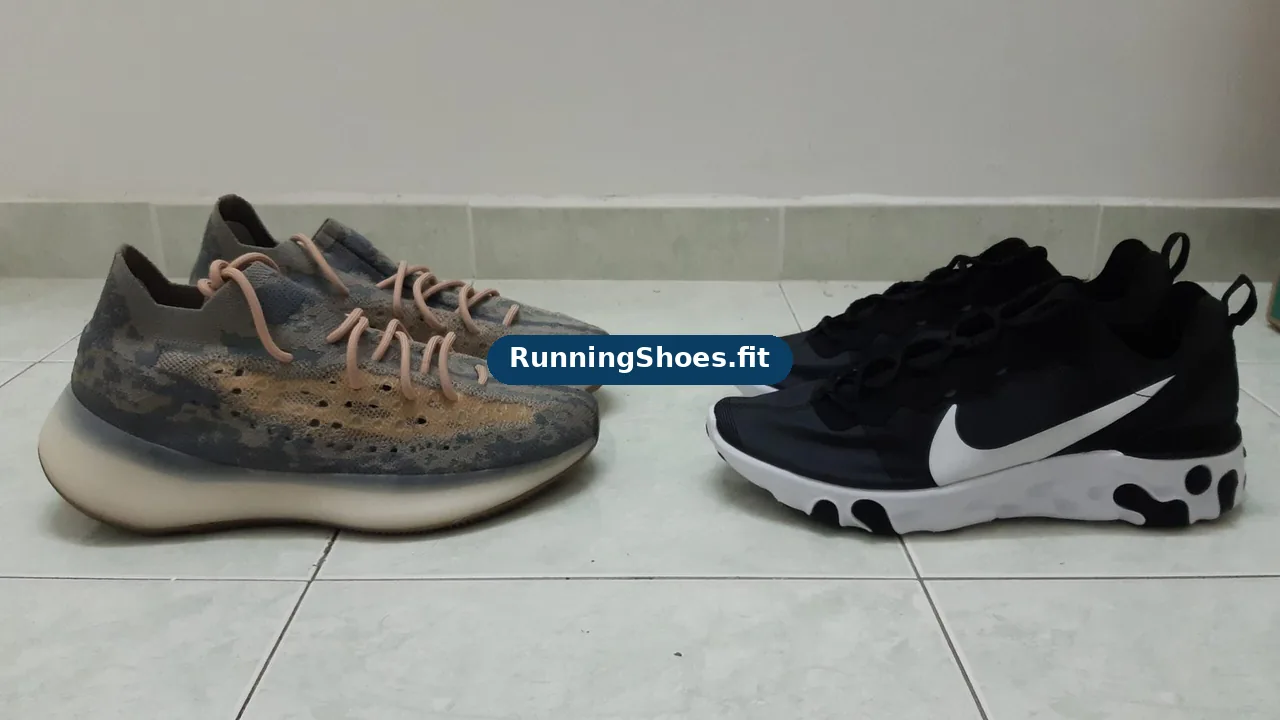

Walk into any gym and you will see rows of treadmills, a rig full of barbells, and a class about to start burpees. Look down at feet and you will spot two very different kinds of footwear: springy running shoes and flat, wide training shoes, built for completely different jobs.
I am Muhammad, editor of RunningShoes.fit, and this guide explains the difference in plain terms. Wearing the wrong shoe will not ruin you overnight, but it can make training less comfortable and, over time, less safe.
Built for different jobs
Running shoes are designed for one primary motion: moving forward, one foot after another, thousands of times in a row. Every element, from the cushioned heel to the flexible forefoot, exists to make repetitive forward strides efficient and comfortable.
Training shoes, often called cross trainers or gym shoes, are designed for variety. A typical session might include squats, lunges, box jumps, lateral shuffles, and short sprints, so the shoe needs to handle side to side movement, sudden stops, and heavy loads without tipping or sliding.
That single difference explains almost everything else. A runner logging miles in flat gym shoes misses cushioning and guidance, while a lifter doing heavy squats in soft running shoes stands on an unstable base.
The key design differences
Cushioning and heel height
Running shoes pack generous cushioning under the heel, often with 8 to 12 millimetres of heel to toe drop. This geometry encourages a smooth heel to toe transition and protects joints from repetitive impact, and models like the Nike Pegasus, a long standing daily trainer, show this formula at its most refined.
Training shoes use far less cushioning and sit much flatter, often with a drop of 4 millimetres or less. A lower, firmer platform keeps you connected to the floor during lifts, and the Nike Metcon is a textbook example of that flat, stable approach.
Stability and lateral support
Lateral movement is where the two categories diverge most. Running shoes are built to flex and roll forward, so their soft sidewalls offer little resistance if you cut sideways, and you will feel the upper strain and the foot slide during a fast shuffle.
Training shoes add structure where running shoes do not: firmer sidewalls, wider bases, and sometimes external cages or wraps that lock the midfoot. The Adidas Dropset and the Reebok Nano both use this kind of locked down construction to keep your foot planted during multidirectional work.
Flexibility and weight
A good running shoe bends easily at the forefoot, letting your toes flex naturally through push off. The whole shoe is tuned for the running gait cycle, and extra weight is trimmed wherever possible to keep legs fresh over distance.
Training shoes are deliberately stiffer, especially through the midfoot, because a shoe that bends under a loaded barbell is a liability. They are usually a little heavier too, a trade off most gym goers never notice but every runner would feel by kilometre ten.
Outsole and grip
Running outsoles use segmented rubber and flex grooves arranged for forward motion, with compounds chosen for road or trail surfaces. They grip well in a straight line but can feel vague when you plant and pivot.
Training outsoles are flatter and wider, with multidirectional tread patterns that bite during lateral moves and rope climbs. The rubber is often harder too, to survive abrasive gym floors and the occasional rope burn.
| Feature | Running shoes | Training shoes |
|---|---|---|
| Main motion | Forward, repetitive strides | Multidirectional gym work |
| Cushioning | Generous and soft | Thin and firm |
| Heel drop | About 8 to 12 mm | About 4 mm or less |
| Side support | Low, built to roll forward | High, built to stay planted |
| Flexibility | Flexible forefoot | Stiffer midfoot |
| Best for | Road miles and treadmill runs | Lifting, HIIT, and classes |
Which shoe for gym, HIIT, and court sports
For pure strength training, a flat training shoe wins every time. Squats, deadlifts, and overhead presses all benefit from a stable base, and the locked down fit keeps your foot from shifting inside the shoe during heavy sets.
For HIIT classes that mix cardio and strength, a training shoe is still the safer pick. You will be jumping, shuffling, and changing direction constantly, which plays to the trainer strengths, while running shoes only work well if the class is heavily cardio biased.
For court sports like tennis, badminton, or basketball, neither is ideal, because proper court shoes exist for a reason. If you must choose, a training shoe with lateral support and a flat outsole is far closer to what court play demands.
Can you run in training shoes?
For short distances, yes. A kilometre or two on the treadmill as a warm up will not cause problems, and many people do exactly that before lifting, even though the firm platform feels different.
For real training miles, training shoes are a poor substitute. The lack of cushioning means your joints absorb more impact, and the stiff, flat geometry fights the natural rolling motion of your stride, so if you run on the treadmill regularly, our treadmill running shoes guide explains why a proper running shoe is better.
Beyond about 5 kilometres, most runners find training shoes uncomfortable and the injury risk climbs with distance. If you are building mileage, do it in shoes designed for the job, like those in our marathon running shoes roundup.
Can you train in running shoes?
Light gym work in running shoes is fine. If your session is mostly machines, light dumbbells, and core work, the shoes on your feet matter less, and plenty of people train this way without issues, especially on a budget, as our best cheap running shoes list shows for one pair that does a bit of everything.
Heavy lifting is where running shoes become a problem. The soft, high heel compresses unevenly under load, which can tip you forward during squats and reduce force transfer, so for anything with a barbell, switch to a flat shoe or lift in socks if your gym allows it.
How to choose the right pair
Start with your primary activity. If you run three times a week and lift once, buy running shoes first, and if you lift four times a week and run occasionally, buy training shoes first, because the shoe should match what you do most.
Getting the fit right matters for both types, so revisit our guide on how running shoes should fit before you buy. If you do both regularly, consider owning one of each, because rotating also extends the life of both pairs.
Try them on with the socks you train in, and test the movements you actually do. Jog in place and do a few lateral shuffles in the shop, because a running shoe should feel springy going forward while a training shoe should feel planted going sideways.
Watch: training shoes vs running shoes
This video lays out the key differences between the two categories. It is a quick visual summary if you are deciding which pair to buy first.
Frequently asked questions
What is the main difference between running and training shoes?
Running shoes are built for forward motion with soft cushioning and a higher heel, while training shoes have a flatter, firmer base with lateral support for multidirectional gym work. The key difference is the direction of movement each shoe is designed to handle.
Can I wear running shoes for weightlifting?
Light weights are fine, but heavy lifting in running shoes is risky. The soft, raised heel compresses unevenly under load and can tip you forward, so for squats and deadlifts a flat training shoe is much safer.
Are training shoes good for running?
Only for very short distances. Training shoes lack the cushioning and forward rolling geometry that protect your joints over distance, so beyond a kilometre or two most runners find them uncomfortable.
Do I need both running shoes and training shoes?
If you run and train regularly, yes. Each shoe is optimised for its own activity, and using the right one improves comfort and safety, while rotating two pairs also extends their lifespan.
What is heel drop and why does it differ?
Heel drop is the height difference between heel and forefoot, measured in millimetres. Running shoes typically have 8 to 12 mm to aid forward roll and cushioning, while training shoes use 4 mm or less for a stable, ground connected feel during lifts.
Final thoughts
Running shoes vs training shoes is not a contest with a winner. It is a choice between two tools, each excellent at its own job, so match the shoe to the workout and both your performance and your joints will be better for it.
When in doubt, think about the direction you move most. Choose the shoe built for exactly that, and you will feel the difference in the first session.