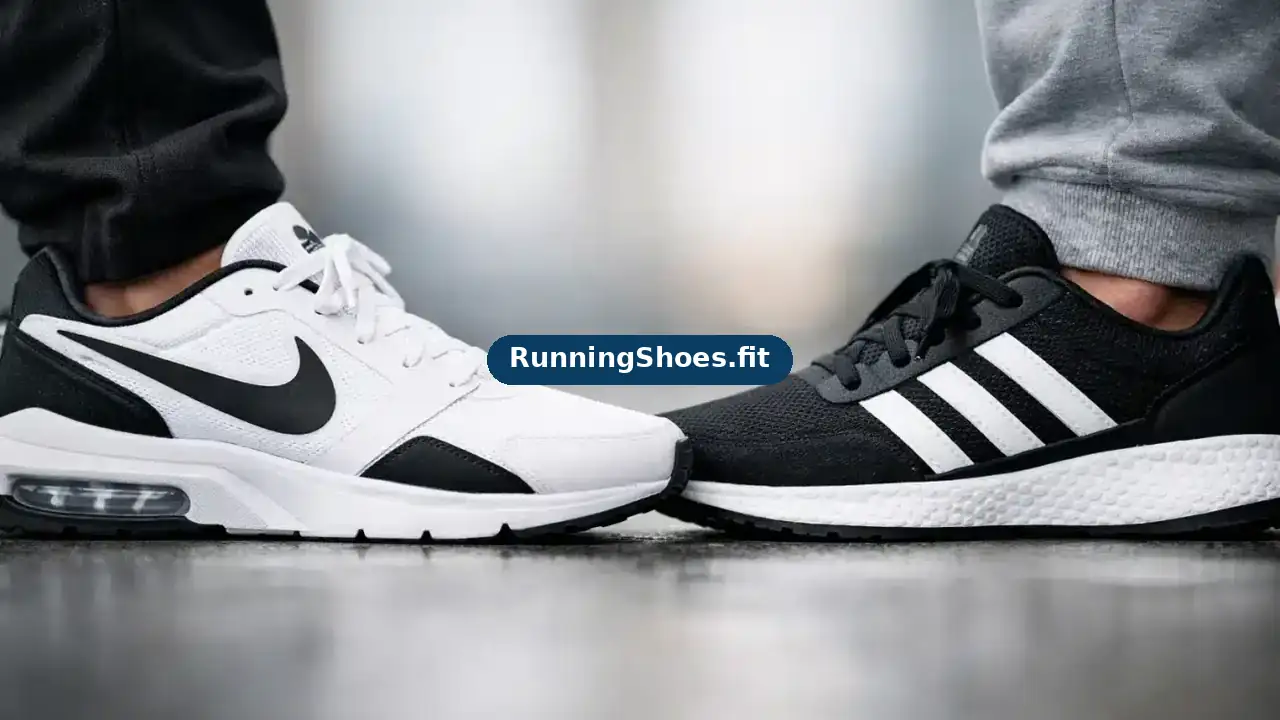

Deciding between Adidas and Nike running shoes is harder than it looks. The two biggest names in the sport have spent decades trying to out-innovate each other, and runners are the winners.
I am Muhammad, editor of RunningShoes.fit, and this guide breaks down the real differences: the foams, the fit, the stability, and the price tags. Which one is better for you depends on your feet, your running, and what you value in a shoe, so let us compare them properly.
Two brands, two philosophies
Before comparing shoes, it helps to understand what each brand is chasing. Those philosophies shape everything from the foam under your feet to the fit around them.
Nike: built for speed
Nike lives for fast. Their racing identity runs through the whole lineup: light builds, bouncy foams, and race day weapons tested with elite athletes. If you love a shoe that urges you to pick up the pace, Nike usually delivers.
Adidas: engineered for the long haul
Adidas comes from a German engineering tradition: precise, durable, and built to last. Where Nike chases speed, Adidas chases consistency: energy return you can count on, in any weather, run after run.
Cushioning: the heart of the shoe
The midsole is where these brands differ most. Each has its own foam recipe, and they feel nothing alike.
Nike: Air, ZoomX, and React
Nike Air is the original: pressurised air units that have been around since the late 1970s and still show up today. ZoomX is the superstar: ultra light, ultra bouncy, and famously packed into the Vaporfly and Alphafly racers, the foam behind a pile of world records.
React sits in the middle: soft, springy, and durable enough for daily training. If you want the foam story in full, our Nike React vs Adidas Boost comparison goes deeper.
Adidas: Boost and Lightstrike
Boost changed the game in 2013. Thousands of TPU pellets fused into a midsole that stays bouncy in any temperature and refuses to die; it is one of the most durable foams ever made. See how Boost works on adidas.com.
Lightstrike is the newer, lighter answer for speed: less plush, more direct, built for fast efforts and race day in the Adizero line.
| Category | Nike | Adidas |
|---|---|---|
| Foam feel | ZoomX and React: light, bouncy | Boost: plush, durable |
| Fit | Flyknit: snug, sock-like | Primeknit: plusher, forgiving |
| Wet grip | Carbon rubber: solid | Continental rubber: outstanding |
| Value | Best tech at top prices | Boost across more price points |
Fit and upper feel
Foam gets the headlines, but the upper decides whether you love a shoe. Both brands knit their uppers, but the feel differs.
Nike: Flyknit and engineered mesh
Flyknit wraps the foot like a sock: light, seamless, and precise. Nike also uses engineered mesh with zoned ventilation, keeping things breathable without extra bulk. If you like a shoe that disappears on your foot, Nike’s uppers are hard to beat, and our guide on how running shoes should fit explains what to check.
Adidas: Primeknit and forged mesh
Primeknit is Adidas’s answer: a knitted upper with a plusher, more forgiving feel that hugs without squeezing, which wider feet tend to appreciate. Some models use forged mesh, where heat and pressure create support zones without overlays, for a clean look and no hot spots.
Stability and grip
Nike: quiet stability, waffle grip
Nike’s stability features stay out of the way: wider bases, guide rails, and shaped midsoles that nudge rather than force, so their stability shoes feel surprisingly natural. The waffle outsole is a Nike icon, and modern versions mix hard carbon rubber where you need durability with softer rubber where you need grip.
Adidas: Torsion and Continental rubber
Adidas leans on the Torsion System, a midfoot bridge that lets the front and back of the shoe move independently; it doubles as arch support. Then there is the Continental rubber partnership: outsoles using rubber from the tyre maker, which means outstanding grip in wet and dry conditions plus serious durability.
Race day: who is faster?
On the start line of a major marathon, you will see both brands. Nike’s Vaporfly and Alphafly pair ZoomX foam with carbon plates for a ride that launches you forward, and they own a huge share of world records.
Adidas fights back with the Adizero Adios Pro: Lightstrike Pro foam plus EnergyRods that work like the bones in your foot. It is also a record breaker, with a slightly more natural feel than Nike’s rockets. New to all this? Start with our best running shoes for beginners before spending big on a super shoe.
Daily training and long runs
Most of your miles happen here, so this category matters most. Nike’s Pegasus is the default daily trainer for a reason: versatile, comfortable, and durable. The Invincible Run adds max cushioning for tired legs.
Adidas answers with the Ultraboost: plush Boost foam that feels the same on mile 1 and mile 500. The Solarboost and Adistar lines split the difference between cushion and support, and our cheap running shoes roundup covers the entry level picks from both brands.
Trail, price, and value
Both brands do trails now. Nike’s Kiger and Wildhorse bring rugged outsoles and rock protection, while Adidas’s Terrex line pairs Continental rubber grip with burly uppers built for technical terrain. Neither is a trail specialist on the level of dedicated outdoor brands, but both are solid for mixed terrain.
On price, both brands span from budget friendly to eye watering. Entry models use simpler foams and keep things affordable, which is great for new runners. At the top end, Nike’s super shoes tend to cost more, while Adidas spreads Boost across more price points, so for most runners Adidas offers slightly better bang for buck.
Watch: the big lineups compared
This video lines up Nike, Adidas, and ASICS side by side. It is a useful overview of how each brand thinks about its running shoes.
So which is better?
Here is the honest answer: there is no single winner, only the right shoe for your feet. Nike tends to suit runners who want light, fast, and propulsive. Adidas tends to suit runners who want plush, stable, and durable.
Know your feet
Neutral runner or overpronator? Cushion lover or ground feel fan? Your biomechanics matter more than the logo, and both brands make neutral and stability options that feel different, so try both. If you are unsure where to start, Mayo Clinic Health System’s tips on choosing running shoes are a solid primer.
Pick your cushion and match your running
Want bouncy and exciting? Look at Nike’s ZoomX and React. Want plush and consistent? Look at Adidas Boost. There is no wrong answer, only preference, and the only way to know is to run in both. Marathon training, 5K speedwork, and easy daily miles all ask for different things, so match the shoe to the running you actually do.
Frequently asked questions
Is Nike or Adidas better for wide feet?
Both brands offer wide options, but Adidas uppers, especially Primeknit models, tend to be a little more forgiving. Nike’s Flyknit can feel snugger, so wide-footed runners should size up or choose a wide fit. Always fit-check in store when you can.
Which is better for marathons, Nike or Adidas?
Both make proven marathon racers. Nike’s Vaporfly and Alphafly lead on energy return and records, while Adidas’s Adios Pro suits runners who want a slightly more natural feel. For daily marathon training, the Pegasus, Invincible Run, Ultraboost, and Adistar lines all work well.
Are Nike or Adidas running shoes more durable?
Adidas usually wins on outsole durability thanks to Continental rubber, and Boost foam holds its bounce for a very long time. Nike’s premium foams can soften a little sooner, though models like the Pegasus and Invincible Run still last well.
Which brand is better for beginners?
Neither, and both. What matters is fit, cushioning, and comfort for your feet, not the logo. Try one neutral daily trainer from each brand and pick the one that disappears on your foot; our guide to the best running shoes for beginners explains what to look for.
Do Nike and Adidas make shoes for flat feet or high arches?
Yes. Both offer stability and cushioned models designed for different arch types and gaits, and insoles are available for extra support. Our Adidas Boost vs Nike React comparison goes deeper on how the foams behave for different runners.
The bottom line
Nike and Adidas are both excellent, and the rivalry keeps both honest. Try a pair from each, trust your feet over the marketing, and pick the one that makes you want to run again tomorrow.



Pingback: Adidas Boost vs Nike React: Which Is Better?
Pingback: Nike vs Adidas for Arch Support: Which Wins?
Pingback: Best Running Shoes for High Arches 2026
Pingback: Best Nike Running Shoes for Every Runner in 2026
Pingback: Best 5K & 10K Running Shoes for Every Runner
Pingback: Best Adidas Running Shoes for Road and Trail 2026
Pingback: Best Asics Running Shoes for Road Running in 2026