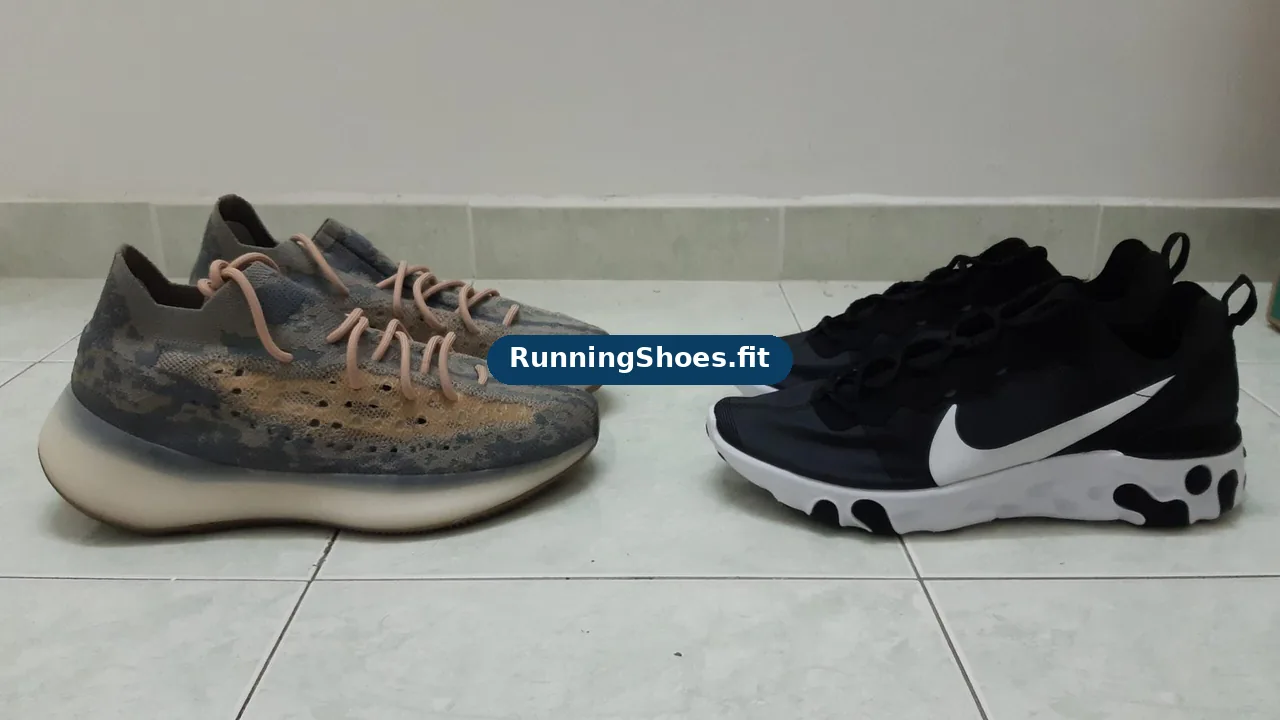

Two foam names dominate running shoe talk: Adidas Boost and Nike React. Both promised a softer, springier ride than the plain EVA foam that came before them, and both delivered. The question runners keep asking me is simpler: which one should be under your feet?
I am Muhammad, editor of RunningShoes.fit, and this guide compares the two foams honestly: how each is made, how each feels, and how long each lasts. If you are still weighing the brands as a whole, start with our Adidas vs Nike running shoes comparison, then come back here for the foam detail.
One more thing before we start: both foams appear in shoes at very different prices and stack heights, so a thin React trainer and a max cushion React shoe feel like cousins, not twins. The foam sets the character; the shoe’s design sets the rest.
Adidas Boost, explained
Adidas launched Boost in 2013, and it reset what runners expected from cushioning. Developed with BASF, Boost is made from thermoplastic polyurethane (TPU) pellets that are steamed and fused into a midsole. The result feels soft underfoot but snaps back with real energy.
Boost also shrugs off temperature swings, performing the same in summer heat and winter cold. And it lasts: the TPU build resists packing out far longer than standard EVA foam.
What makes Boost special
- Energy return: Boost absorbs impact and hands much of it back, so easy miles feel springy instead of flat.
- Durability: unlike EVA, which compacts over time, Boost holds its bounce for hundreds of miles, often past 500.
- Temperature resistance: hot or cold, the ride feels the same from the first mile to the last.
- Plush comfort: a soft, protective feel that suits daily training and long runs.
Popular Boost models
The UltraBoost is the flagship: maximum cushioning for daily miles and recovery days. The SolarBoost line blends that cushioning with a touch more stability for runners who need guidance. For race day, the Adizero Adios Pro pairs Boost family tech with a fast, propulsive ride.
Nike React, explained
Nike answered in 2017 with React, a synthetic foam blending TPE-O and EVA. The goal was ambitious: one foam that could be soft, light, responsive, and durable at the same time. Most foams manage two or three of those; Nike wanted all four.
The result is immediate comfort. React gives a plush landing with a noticeable spring back, wasting less of your energy and rolling you smoothly through each stride.
What makes React special
- Softness: a distinctly soft landing that feels comfortable right away, often described as pillowy.
- Responsiveness: despite the softness, React returns energy well and feels lively underfoot.
- Lightweight: noticeably lighter than Boost, which matters late in long runs and at faster paces.
- Durability: far tougher than traditional EVA, though it softens a little sooner than Boost at very high mileage.
Popular React models
The Epic React Flyknit introduced the foam with a balanced, versatile ride. The React Infinity Run added a wider base and more foam for runners who want extra guidance. The Pegasus line uses React for a dependable daily trainer, while the Invincible Run packs in maximum React for the softest ride Nike makes. For current picks across brands, see our roundup of the best running shoes to buy in 2026.
Boost vs React, head to head
Side by side, the two foams serve different preferences. Here is the short version before we get into the details.
| Factor | Boost | React |
|---|---|---|
| Energy return | Steady, trampoline-like bounce | Soft, immediate pop |
| Comfort | Firmer at first, protective on long runs | Sink-in softness from step one |
| Durability | Often past 500 to 600 miles | Very durable, softens a bit sooner |
| Weight | Heavier, denser foam | Noticeably lighter |
Energy return
Boost gives a consistent, bouncy return that runners describe as a trampoline effect: a steady push back with every step. React feels softer and more immediate, with less firm bounce and more gentle, springy pop.
Comfort and ride
Boost starts a touch firmer and softens with miles, delivering protective comfort that lasts on long runs. React gives instant sink-in softness that feels welcoming from the first step. React often wins first impressions; Boost wins over the long haul.
Durability
Boost sets the standard here. Its TPU build resists compression remarkably well, often holding up past 500 to 600 miles. React beats traditional EVA comfortably, though some runners notice it softening sooner than Boost at very high mileage.
Weight
This is React’s clearest win. Boost’s density makes full Boost shoes inherently heavier, while Nike engineered React to stay light. The difference shows up at faster paces and late in long runs, where every ounce counts.
Feel on foot
Beyond the numbers, the two foams change how a shoe feels on your foot. Boost shoes tend to feel planted and substantial, which many runners like on tired legs. React shoes feel lighter and snappier, a little closer to the ground, which builds confidence on faster days. Neither is right or wrong; it is a personality difference, and most runners know within one run which personality suits them.
Watch: Boost vs React compared
The video below puts an Epic React shoe and an UltraBoost through a full visual comparison. It is the quickest way to see how differently the two foams are built.
Who should choose which
For daily miles
If easy miles and long runs are your bread and butter, Boost is the classic pick, because its durable, protective cushioning holds up over hundreds of miles. If most of those miles happen indoors, our treadmill running shoes guide is worth a look.
For speed
For tempo runs and races, React’s lightness and immediate pop usually win. Faster paces feel a little more effortless, and the saved weight adds up over distance. Boost can run fast too, but React’s weight advantage is real.
For pure comfort
Want sink-in softness from the first step? Pick React. Want resilient, energetic comfort that feels the same at mile 20 as at mile 1? Pick Boost. And if the budget is tight, our best cheap running shoes roundup shows what both brands offer for less.
Frequently asked questions
Is Boost or React better for pronation control?
Neither foam controls pronation by itself. That job belongs to the shoe’s structure: medial posts, wider bases, or guide rails. Both brands build stability models on these foams, like the SolarBoost or the React Infinity Run.
Which foam lasts longer at high mileage?
Boost, by most accounts. Its TPU construction resists compression and keeps its bounce for a very long time, often past 500 to 600 miles. React is impressively durable for a lightweight foam, but Boost tends to hold its original feel a little longer.
Can I rotate Boost and React shoes?
Absolutely, and many runners do. Using Boost for long slow runs and React for tempo days spreads stress across different muscles and extends the life of each pair. It is also simply more fun to experience both.
Do the foams perform differently in hot or cold weather?
Boost handles temperature swings better, because its TPU build feels the same in freezing cold and summer heat. React performs well too, with only minor changes in extreme temperatures that most runners never notice.
Which foam gives better ground feel?
React, generally, especially in lower stack models. Its softness and responsiveness keep you a bit more connected to the ground. Boost’s plush bounce puts a little more foam between you and the road, so it comes down to preference.
The bottom line
Boost and React are both superb foams; they just take different paths to a great ride. Think of it as Boost the durable workhorse, React the light, lively all-rounder. Match the foam to your priorities, try both on if you can, and your feet will make the final call.

Pingback: Best Neutral Running Shoes in 2026: Top Everyday Picks
Pingback: Best Women's Running Shoes With Arch Support in 2026
Pingback: Best Nike Running Shoes for Every Runner in 2026
Pingback: Best Adidas Running Shoes for Road and Trail 2026
Pingback: Adidas vs Nike Running Shoes: Which Brand Wins for You?
Pingback: Nike Pegasus 42 vs Adidas Ultraboost: Which Daily Trainer Wins?