
Trail running humbles even fit road runners. Trade smooth asphalt for a root covered singletrack and your regular trainers are suddenly out of their depth, because grip disappears, ankles wobble, and every sharp stone telegraphs straight through the sole.
I am Muhammad, editor of RunningShoes.fit, and that is exactly why trail running shoes exist. This guide breaks down what makes a trail shoe work, from lug patterns to rock plates, then matches the best trail running shoes of 2026 to their terrain, whether you run muddy forest loops, rocky ridges, or a little of everything.
What makes a great trail running shoe
Road shoes are built for predictable surfaces, while trail shoes are built for everything else. The difference comes down to four features that keep you upright when the ground gets interesting.
Outsole grip and lug depth
Lugs are the small rubber teeth on the outsole, and they are the heart of every trail shoe. Shallow, tightly spaced lugs roll fast on hard packed dirt, while deep, widely spaced lugs bite into mud and shed it as you run, and most versatile trail shoes sit in the middle.
The rubber compound matters as much as the lug shape. Softer, stickier compounds grip wet rock and slick roots far better than hard, long wearing ones, and many top trail shoes rely on Vibram Megagrip for that balance of stickiness and durability.
Rock plates and underfoot protection
A rock plate is a thin shield embedded in the midsole that spreads the force of sharp stones across a wider area. You will appreciate one the first time you land hard on a pointed rock ten miles into a run, and protection also comes from the upper, where reinforced toe caps fend off stubs and denser mesh keeps grit away from your socks.
Waterproofing or breathability
Waterproof membranes keep water out, which sounds ideal until you realise they also keep water in. Once water gets in over the collar during a stream crossing, a waterproof shoe drains slowly and stays heavy for miles, so for most runners a breathable shoe paired with good socks is the better call.
Choose waterproof only when you regularly run in cold rain, slush, or shallow snow, where warmth matters. For summer running, mud, and creek crossings, go breathable every time and accept wet feet that dry fast.
Heel drop and fit
Heel to toe drop on trail shoes usually runs lower than on road shoes, often between 4mm and 8mm. A lower drop encourages a midfoot strike that feels natural and stable on uneven ground, while zero drop options demand a patient transition if your calves are used to a higher heel.
Fit matters even more on trails because your feet swell and slide around. Look for a thumb’s width of space ahead of your longest toe, a secure midfoot, and a heel that stays locked on descents, and our guide on how running shoes should fit walks through the whole process.
The best trail running shoes by terrain
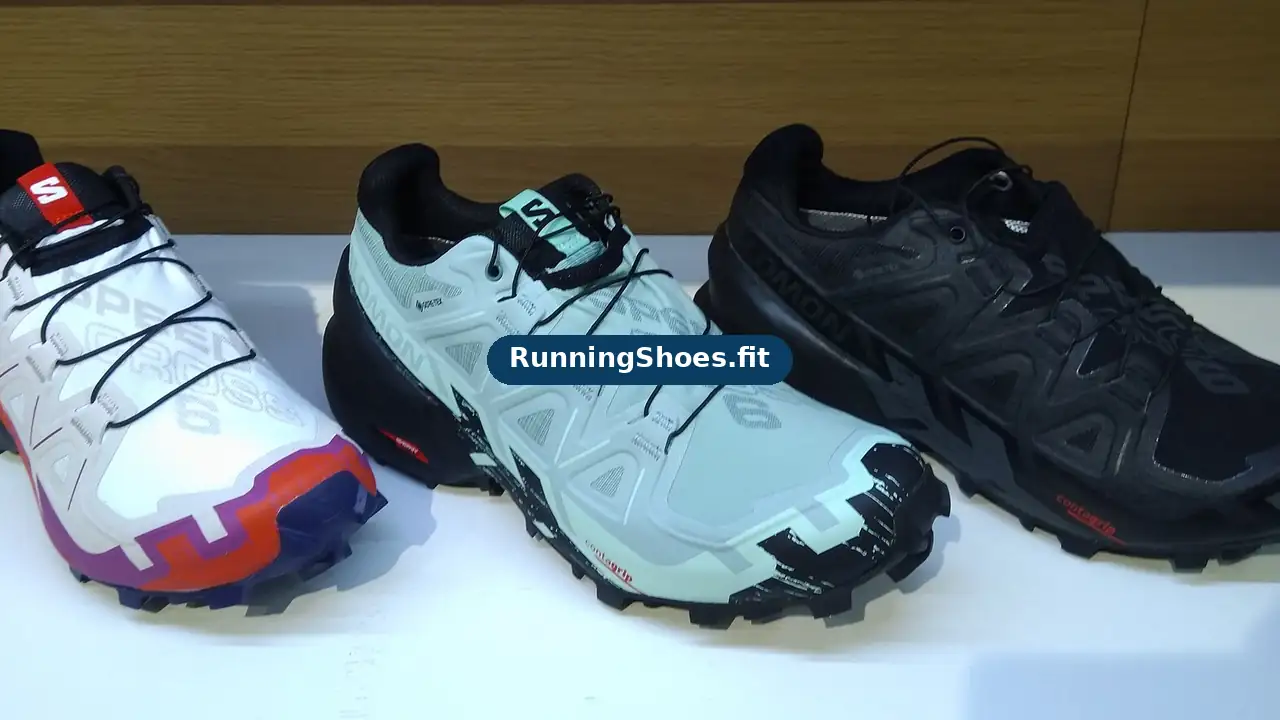
Best for mud: Salomon Speedcross 6
The Speedcross is the mud specialist that every other mud shoe gets compared to. Its deep, arrow shaped chevron lugs dig into soft ground and release mud with each stride instead of packing up into a slippery platform, and the snug Salomon fit locks the midfoot down so your foot never swims when the trail turns to soup.
This is a specialist, not an all rounder. On hard packed trails the aggressive lugs feel harsh and wear down quickly, but if your local loops stay soft and sloppy for half the year, nothing inspires confidence in deep mud like the Speedcross 6.
Best for long distances: Hoka Speedgoat 7
The Speedgoat has become the default answer for trail ultramarathons, and the latest version continues the formula that made it famous. You get generous Hoka cushioning, a Vibram Megagrip outsole for dependable traction, and a stable ride that holds up when your legs are cooked.
It handles everything from smooth dirt to moderately technical rock, which makes it a strong one shoe choice for varied terrain. At mile 40 of a mountain ultra, that cushioning is protection, not luxury.
Best all rounder: Saucony Peregrine 16
If you can only own one trail shoe, the Peregrine 16 makes a compelling case. It balances cushioning, grip, and ground feel better than almost anything else in its class, with PWRTRAC rubber that bites confidently on wet rock and roots, and you can check the latest version on Saucony’s official Peregrine 16 page.
Where the Peregrine really wins is versatility. It is happy on smooth fire roads and capable on technical singletrack.
Best for technical rock: Brooks Cascadia 20
Rocky, rooty, technical trails demand a shoe that protects without going numb. The Cascadia 20 answers with a protective plate system that shields your feet from sharp stones while keeping the ride stable on off camber terrain, and the full specs are on Brooks official Cascadia 20 page.
This is the shoe for mountain runners who pick the gnarliest line on purpose. It is a touch heavier than the speed oriented options, but that weight buys protection and surefootedness when the consequences of a slip are real.
Best zero drop: Altra Lone Peak 9
The Lone Peak is the zero drop trail icon, and the 9 keeps everything fans love: a completely flat platform and Altra’s FootShape toe box that lets your toes splay naturally. On long trail days, that roomy forefoot is a genuine comfort advantage once your feet start to swell.
Zero drop is not for everyone, and it is not something to jump into overnight. Transition gradually with short runs to let your calves and Achilles adapt, because rushing the switch is a common cause of calf strains.
Best door to trail: Nike Pegasus Trail
Not every run starts at a trailhead. The Nike Pegasus Trail is built for running to the trail, on the trail, and back home again, borrowing the familiar ride of the road Pegasus and adding a trail ready outsole with enough bite for dry dirt and gravel.
Think of it as the perfect second shoe or the ideal travel shoe. If most of your weekly miles are on the road, this is a smarter buy than a hardcore mud shoe, and our guide to choosing running shoes for daily runs pairs well with it for a complete two shoe rotation.
Trail shoes vs road shoes
The core differences are grip, protection, and stability. Trail outsoles use deeper lugs and stickier rubber, midsoles often hide rock plates, and uppers run tougher, while road shoes prioritise smooth rolling cushioning on predictable surfaces, and most neutral road shoes feel vague and slippery the moment the trail tilts or gets wet.
That said, you do not need trail shoes for every off road step. On smooth, dry towpaths and park trails, your regular trainers are perfectly fine.
How long do trail shoes last
Expect roughly 300 to 500 miles from a pair of trail shoes, though the range is wide. Abrasive rocky terrain chews through outsoles far faster than soft dirt, so the first things to go are usually the lugs, which round off and lose bite.
Watch for warning signs rather than counting miles obsessively. If you start slipping on terrain that used to feel secure, the shoes are telling you they are done, and our guide to how many miles running shoes last covers the replacement signals in detail.
Watch: the best trail shoes of 2026 in action
Specs only tell half the story. This video walks through the top trail running shoes of 2026 so far.
Frequently asked questions
Can I wear trail running shoes on roads?
For short stretches, yes. Trail shoes handle the road connectors between trails just fine, but the lugged outsoles wear down faster on asphalt and feel less smooth than road shoes, so if more than half your run is on pavement, stick with road trainers.
Do I need waterproof trail running shoes?
Most runners do not. Breathable trail shoes dry faster after stream crossings and rain, while waterproof membranes trap water once it gets in over the collar, so choose waterproof only for cold, wet winter running where warmth matters.
How often should I replace trail running shoes?
Most trail shoes last 300 to 500 miles, but rocky terrain wears outsoles faster. Replace them when the lugs round off and lose bite, or when new aches appear in your feet and knees.
Are zero drop trail shoes good for beginners?
They can be, but transition slowly. Zero drop shoes like the Altra Lone Peak change how your calves and Achilles load, so start with short runs and build up over several weeks to avoid calf strains.
Can I hike in trail running shoes?
Absolutely. Many hikers prefer trail runners over boots for their light weight and comfort on maintained trails, though for rough, off trail terrain with a heavy pack, boots still offer more ankle support and protection.
The bottom line
The trail shoe market in 2026 is the strongest it has ever been. Whether you need the mud shedding bite of the Speedcross 6, the all day comfort of the Speedgoat 7, or the do everything balance of the Peregrine 16, there is a shoe here that matches your terrain, so remember to buy the shoe for the trails you actually run.
The perfect shoe for someone else’s mountain epic is the wrong shoe for your local muddy loop.


Pingback: Best Saucony Running Shoes in 2026: Daily Miles to Race Day
Pingback: Best New Balance Running Shoes in 2026: 1080, 880 and More
Pingback: Best Waterproof Running Shoes in 2026: Gore-Tex Picks for Rain and Mud